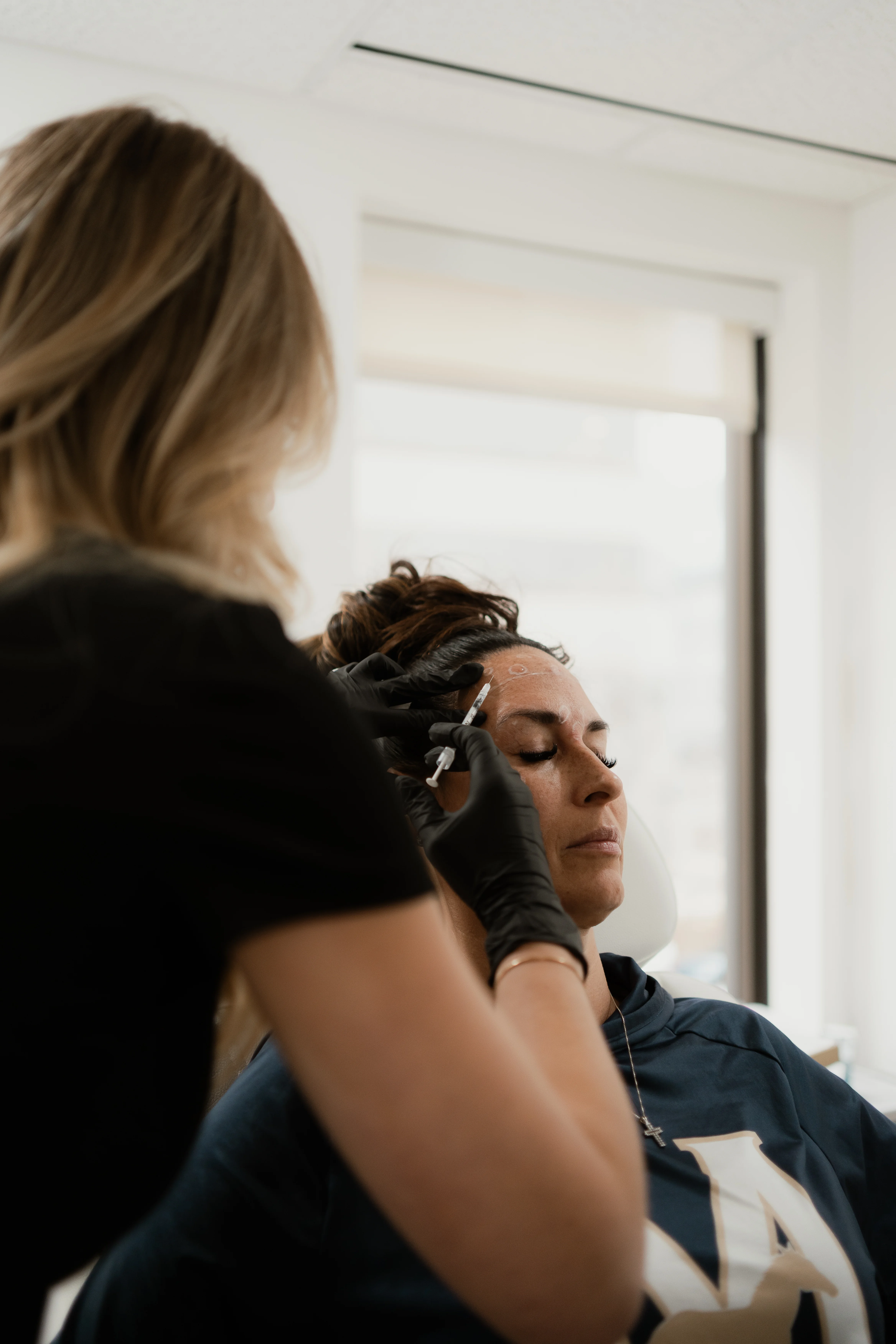
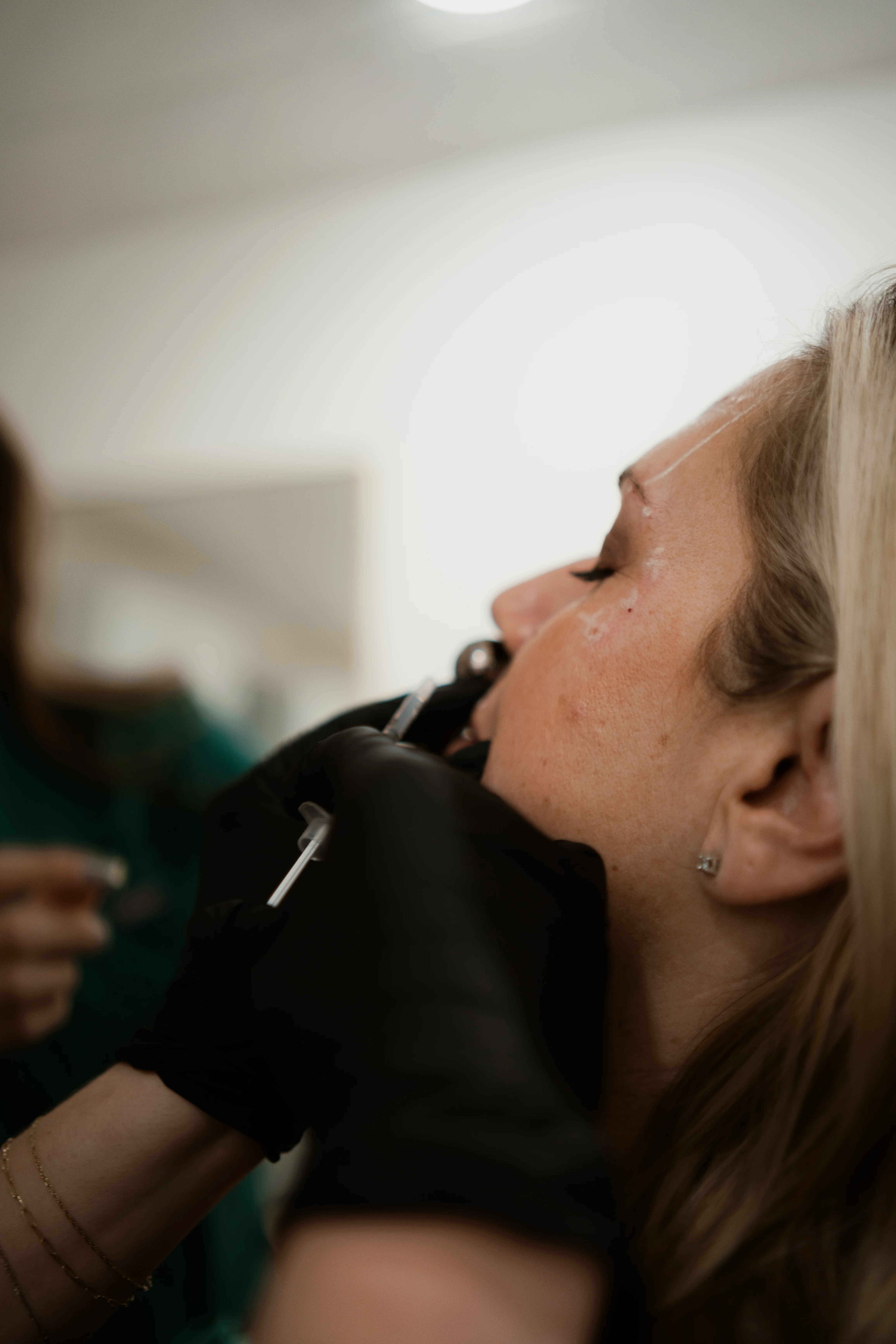
At Nurture Wellness & Aesthetics, we stay at the forefront of regenerative skincare by keeping up with the latest studies and scientific advancements. Two standout tools in modern skin rejuvenation are Platelet-Derived Growth Factor (PDGF) and Polynucleotides (PN/PDRN). Here's a closer look at what they are, how they work, and what you can expect.
Platelet-Derived Growth Factor (PDGF)
What is it?
A lab-engineered, purified protein that mimics a natural growth factor released by your platelets during healing.
How it's made
Created with recombinant DNA technology — scientists place the synthetic human PDGF gene into safe cells (yeast), which then produce pure PDGF protein. If you have an allergy or sensitivity to yeast, the yeast falls off after the process has been made so you are safe.
How it works
Stimulates fibroblasts, collagen production, and blood vessel growth for skin rejuvenation and repair.
Safety
FDA-approved for topical use; injectable use is considered off-label and performed with informed consent. It is not derived from human or animal blood, so allergy risk is very low.
Polynucleotides (PN/PDRN)
What is it?
Natural DNA fragments (building blocks of genetic material) used to help repair and protect skin. Often referred to as "salmon sperm extract" in the skincare community.
How it's made
DNA is extracted from salmon sperm, purified, and broken down into smaller fragments (PN/PDRN).
How it works
Reduces inflammation, hydrates skin, improves elasticity, and supports tissue healing by activating cellular repair pathways.
Safety
Widely used in Europe and Asia; purified to remove proteins and allergens. Generally safe and well tolerated, though not FDA-approved in the U.S.
Treatment Protocol
- Most clients benefit from 2–3 treatments spaced about 8 weeks apart.
- Treatments can be repeated as part of a long-term anti-aging plan.
- Often combined with microneedling, lasers, or other regenerative procedures for enhanced results.
What to Expect
- Results vary based on age, skin health, and treatment plan.
- Temporary redness, swelling, or mild irritation at the injection site is normal.
- Rare risks include infection, allergic reaction, or nodules (very uncommon with proper technique and sterile products).
- Every treatment is performed with informed consent and a personalized plan tailored to your skin.
Questions? We are here to guide you through your regenerative journey. Please ask your provider or book a consultation if you'd like more detail about the science, safety, or expected results.
Book Consultation